

Singer Island Beach Update
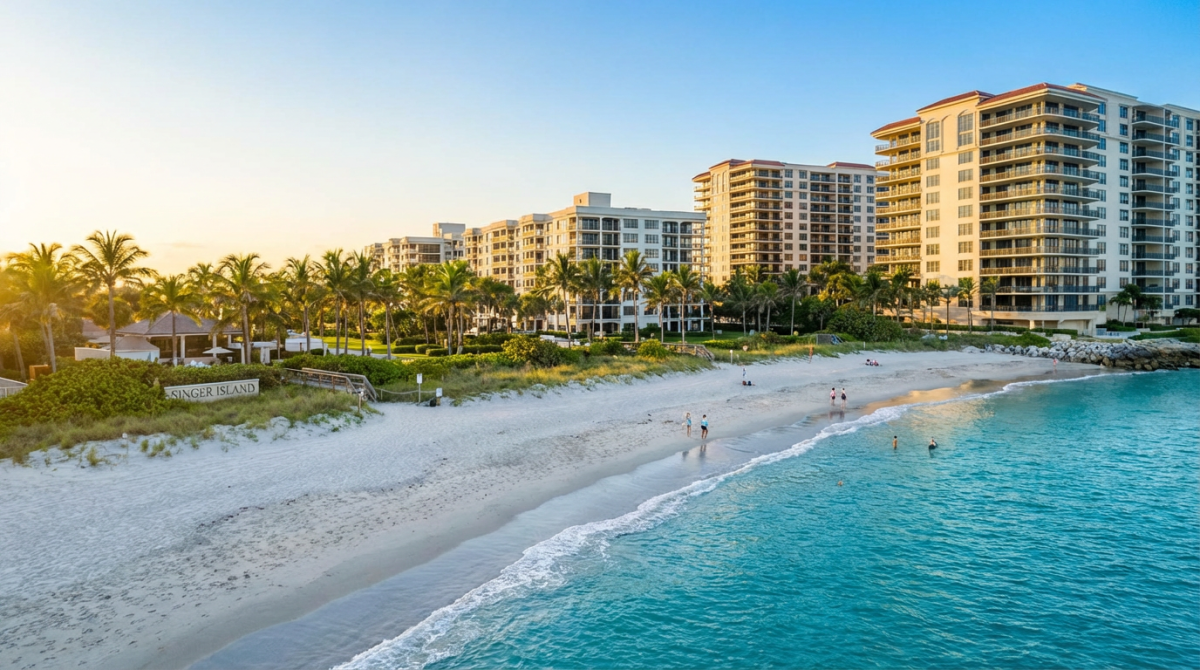
Singer Island’s Beach: Turquoise Water, Wild Dunes—and a Coastline Worth Protecting
If you’ve ever stepped onto the sand at Singer Island, you know the feeling: warm Atlantic breezes, clear blue‑green water, and that wide-open horizon that makes even a short visit feel like a true getaway. Along Florida’s Palm Beach County, Singer Island’s shoreline is loved for its soft sand, inviting swimming conditions, and pockets of “Old Florida” coastal nature that still shine through the modern resort backdrop.
A 2025 spotlight moment: recognition in Southeast/Florida beach rankings
In 2025, Singer Island—especially the Ocean Reef Park area—picked up top-tier recognition in U.S. Southeast/Florida beach rankings, amplified by widely shared travel-media “best-of” roundups.
A quick note on wording: if you’d like me to name the exact award (official title and the organization/publication), share the award name or a link and I’ll match the phrasing precisely. For now, this post refers to the recognition accurately as a 2025 “best in the Southeast/Florida” style ranking and media shout-out.
What makes Singer Island’s beach so unforgettable?
1) That “walk-in” water color
Singer Island often hits a rare sweet spot: water that’s clear enough to see your feet and bright enough to look almost tropical—especially on calm, sunny mornings. When the light is right, the Atlantic shifts between pale turquoise near shore and deeper aqua farther out.
2) A shoreline that still feels alive
This isn’t just a pretty beach—it’s a coastal ecosystem. Depending on where you visit, you’ll notice:
Dune vegetation and sea oats helping hold the shoreline together
Shorebirds working the tide line
Sea turtle nesting activity in season, a reminder that beach width and dune health matter for more than recreation
3) Different vibes along one stretch of coast
Some areas feel resort-adjacent and convenient; others feel quieter and more natural. That variety is part of why Singer Island continues to earn regional praise—and why protecting it is so important.
The challenge behind the scenes: recent beach erosion
Like many barrier island shorelines, Singer Island is constantly being reshaped by waves, tides, currents, and storms. Recently, beach erosion has become more noticeable in certain sections, with narrower dry sand in places and added pressure on dunes and coastal infrastructure.
And here’s the key point: Singer Island’s erosion story is increasingly being treated as something that can’t be solved by a single, repeating tactic.
What’s in motion now (beyond “just rebuild the dune again”)
1) A formal feasibility study for longer-term shore protection options
Palm Beach County authorized engineering services for a Singer Island feasibility study to evaluate “shore protection alternatives” (described as a Coastal Systems Analysis / feasibility study). The scope includes:
reviewing coastal processes
collecting data
developing multiple alternatives
holding public meetings
recommending a cost-effective, permittable approach
Why this matters: County language points to diminishing returns from repetitive dune restoration, tied to the island’s shoreline dynamics, increasing seawalls/coastal armoring, and repeated storm impacts. In other words, the strategy is shifting from “repeat the same repair” toward “design a durable system.”
2) State-funded project pipeline: Singer Island dune nourishment + monitoring
In Florida DEP’s Beach Management Funding Assistance Program long-range budgeting, the “Singer Island Dune Nourishment Project (R60.5–R69)” appears in the construction/monitoring pipeline. The materials also note post-construction monitoring connected to a 2024 nourishment effort.
What that signals: Singer Island is not only “on the list”—it’s in an active cycle where monitoring results help determine what comes next, and how soon.
3) Permitting and “next nourishment window” talk
Public-meeting attachment materials (referenced alongside Juno Beach documents) point to key permitting steps—FDEP and USACE applications—and flag “Potential Nourishment Winter 2026” (with “dune construction as needed”) as a directional timeline marker. Schedules can change, but it’s a helpful indicator of how agencies are thinking about the next workable window.
Why Singer Island is harder than “truck in sand”
Two constraints keep showing up in the County’s own framing of the problem:
Environmental constraints: Singer Island is high-density nesting habitat for endangered marine turtles, which influences timing, lighting, construction methods, and what’s even permissible.
Geologic constraints: extensive nearshore hardbottom can limit some standard coastal engineering approaches and complicate nourishment design and placement.
Together, these constraints help explain why even well-funded beach work here can be slower, more technical, and more tightly regulated than people expect.
What’s happening on the north end right now
A recent local report describes Palm Beach County and Riviera Beach discussing a plan focused on the northern end of Singer Island—and it also highlights a practical limitation that often gets overlooked:
Dune restoration can only happen when there’s enough “dry beach” to place sand.
The same report notes that the County was not planning to restore dunes on Singer Island “this winter” (per the quoted remarks). That’s a sharp illustration of how erosion can reach a point where even “standard” fixes become difficult to execute on schedule.
Looking ahead: groins, nourishment, and a more engineered shoreline strategy
To address persistent erosion, longer-term options being evaluated include sea groins (often just called “groins”)—structures built perpendicular to the shoreline, extending from the beach into the water.
What groins are designed to do
Groins aim to reduce sand loss by interrupting longshore drift (the natural movement of sand along the coast), helping sand accumulate in targeted areas.
Why groins require careful design
Because groins can also change sand movement down the beach, they can create down-drift impacts unless designed as part of a broader, monitored plan (often paired with nourishment and adaptive management).
A beach worth celebrating—and protecting
Singer Island’s 2025 recognition in Southeast/Florida beach rankings makes sense the moment you see the shoreline: it’s beautiful, vibrant, and restorative. But it’s also a coastline under pressure—where the conversation is evolving from “repair it again” to study it, permit it, fund it, monitor it, and build a long-term protection approach that actually holds up.
If you want, paste the link(s) to the County study authorization, the FDEP budgeting entry, and/or the local report—then I can (1) quote them accurately, (2) add a short “Sources” section, and (3) tighten the timeline language so the post reads even more credible and specific.